Market Neutral Strategy in Crypto: Does It Actually Work?
Quick Summary
Market-neutral crypto hedge funds gained 14.4% in 2025 while directional strategies lost money. This guide covers the five main market neutral strategy types, real performance data from 2025–2026, risk-adjusted return comparisons, and a step-by-step walkthrough so you can set one up yourself — no hedge fund required.
Here's a number that should make you rethink your entire trading approach. Market-neutral crypto hedge funds gained 14.4% through November 2025 — while directional funds lost 2.5% and fundamental-focused strategies cratered 23% (CoinEdition, 2025).
That's not a typo. The only profitable strategy category in crypto last year didn't care which way the market moved.
This guide breaks down what market neutral strategies actually are, the five main types used in crypto, real performance data from 2025–2026, and a step-by-step walkthrough so you can set one up yourself. No hedge fund required.
Key Takeaways
- Market-neutral crypto funds returned 14.4% in 2025 while directional funds lost 2.5% (CoinEdition, 2025)
- Delta neutral strategies were positive all 12 months of 2025 with just 0.80% max drawdown (Bybit Institutional, 2026)
- Funding rate arbitrage can yield up to 115.9% over six months with max losses capped at 1.92% (ScienceDirect, 2025)
- 55% of traditional hedge funds now hold crypto, up from 47% in 2024 (AIMA/PwC, 2025)
What Is a Market Neutral Strategy?
According to the AIMA/PwC 7th Annual Global Crypto Hedge Fund Report, 55% of traditional hedge funds now hold crypto exposure, up from 47% in 2024 (AIMA/PwC, 2025). A growing chunk of them are running market neutral strategies. So what does that actually mean?

A market neutral strategy tries to make money regardless of whether prices go up or down. You hold roughly equal long and short positions at the same time. If BTC crashes 20%, your long position loses — but your short position gains about the same amount. The net effect? Close to zero exposure to overall market direction.
The fancy term is "zero beta." In plain English: you don't bet on the market. You bet on the spread between two positions.
In traditional finance, this usually means going long on undervalued stocks and short on overvalued ones. But crypto adds some interesting twists. You've got 24/7 markets, perpetual futures with funding rates, massive price discrepancies between exchanges, and volatility that, despite dropping, still dwarfs most traditional assets.
That volatility is actually a feature, not a bug. Bitcoin's annualized volatility sat at roughly 54% as of January 2025 (Fidelity Digital Assets, 2025). High enough to create profitable spreads between correlated assets. Stable enough for institutions to take these bets seriously.
The bottom line? Market neutral doesn't mean risk-free. It means your profit comes from relationships between positions, not from guessing whether the next candle is green or red.
Why Did Market Neutral Crush Directional Strategies in 2025?
Market-neutral crypto funds gained 14.4% through November 2025. Directional funds? Down 2.5%. Fundamental-focused strategies? Negative 23% (CoinEdition, 2025). The gap wasn't even close.
So what happened? In short: 2025 was a choppy, range-bound mess for most of the year. Bitcoin bounced between support and resistance without establishing a clear trend for months at a time. Directional traders — the ones betting big on "number go up" or "number go down" — got whipsawed constantly.
Market neutral strategies thrive in exactly this environment. They don't need a trend. They need volatility and mean-reverting relationships between assets. And crypto delivered both in spades.
Here's the part that surprised even veteran traders. Bitcoin is actually getting less volatile over time. As of January 2025, BTC was less volatile than 33 individual S&P 500 stocks (Fidelity Digital Assets, 2025). Read that again. Bitcoin is now calmer than a third of the companies in America's benchmark stock index.
Why this matters:
Declining Bitcoin volatility doesn't kill market neutral strategies — it actually makes them more reliable. Lower vol means correlations between crypto assets hold for longer, pair relationships stay stable, and risk managers at institutional firms finally feel comfortable allocating real capital. The opportunity shifts from wild basis spreads to consistent, repeatable edge.
But don't mistake "less volatile" for "not volatile enough." A 54% annualized volatility still dwarfs traditional asset classes. It's a sweet spot. Enough movement to generate spread opportunities, but stable enough that your hedges won't blow up overnight.
If you're only running directional plays, you're leaving money on the table during exactly the periods when most traders lose it. You might want to explore automating your TradingView signals to capture these opportunities around the clock.
What Are the 5 Crypto Market Neutral Strategy Types?
So which type should you actually use? Not all market neutral strategies work the same way. The crypto fund industry tracks $93.4 billion in AUM across 870 active funds, with 50.6% structured as hedge funds (Crypto Fund Research, Q4 2025). Here's how the most common approaches break down.
Cash-and-Carry Basis Trade
This one's the workhorse of institutional crypto. You buy spot BTC and simultaneously short BTC futures. The difference between the spot price and the futures price (called the "basis") is your profit.
Sound simple? It is. But the returns have compressed dramatically. Bitcoin's annualized front-month basis spiked to around 25% in February 2024. By December 2025, it had collapsed to just 4.46%, with 93% of trading days falling below the 5% breakeven threshold (CF Benchmarks, 2025).
That said, creative managers are still finding yield. Securitize earned 10.78% annualized from a Bitcoin basis trade, then layered on 4.25% from using BlackRock's BUIDL fund as collateral — totaling roughly 20.71% combined (The Block, 2025). The pure basis play is shrinking, but those who stack yield sources on top are still doing well.
Funding Rate Arbitrage
Every perpetual futures contract has a funding rate — a periodic payment between longs and shorts that keeps the perp price anchored to spot. When funding is positive (longs pay shorts), you can buy spot and short the perp to pocket those payments.
How profitable is it? A 2025 academic study analyzed 60 funding rate arbitrage scenarios across BTC, ETH, XRP, BNB, and SOL on centralized and decentralized exchanges. Returns hit up to 115.9% over six months, with maximum losses limited to just 1.92% (ScienceDirect, 2025).
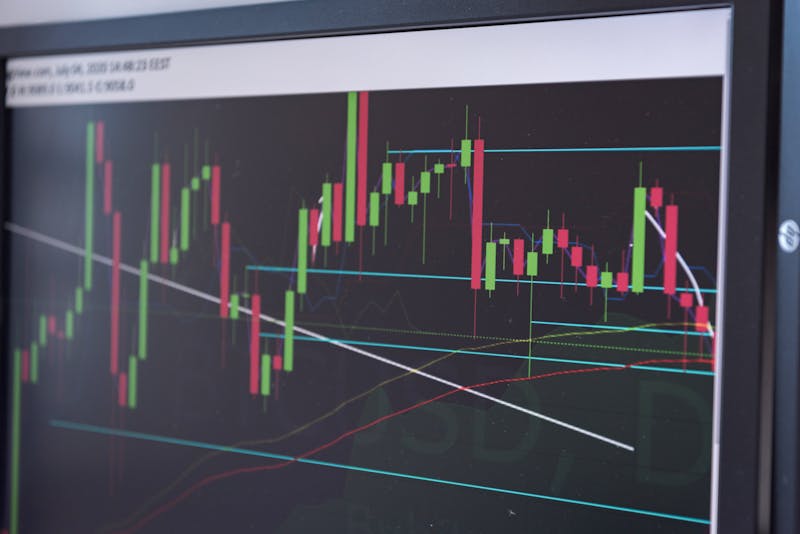
That's not a backtest on cherry-picked data, either. It covered Binance and BitMEX on the CEX side, plus ApolloX and Drift for DEX venues. The strategy worked across all of them, with varying degrees of profitability depending on the venue and the asset.
Statistical Arbitrage (Pairs Trading)
Pick two cryptos that historically move together — like BTC and ETH. When the spread between them deviates from the historical norm, go long the cheap one and short the expensive one. Wait for mean reversion. Collect profit.
A 2026 study using Engle-Granger and Johansen cointegration tests on BTC-ETH pairs found 14.89% annualized returns with a Sharpe ratio of 2.23, even after accounting for 0.10% transaction costs per trade (IJSRA, 2026). The relationship between BTC and ETH has held up remarkably well — making it one of the most reliable pairs in crypto.
Delta Neutral Yield Farming
This one lives in DeFi. You deposit assets into a liquidity pool or lending protocol, then hedge the directional exposure with a short futures position. The yield comes from the DeFi protocol — the hedge removes price risk.
Delta neutral strategies maintained positive returns in every single month of 2025, with monthly gains between 0.43% and 1.42% and a maximum drawdown of just 0.80% (Bybit Institutional, 2026). That's about as close to "boring in a good way" as crypto gets.
Cross-Exchange Arbitrage
The simplest concept of the five: buy on the exchange where price is lower, sell where it's higher. In practice, though, it's the hardest to execute. You need fast execution, low latency connections, and pre-funded accounts on multiple platforms.
Can retail traders compete here? Honestly, not against institutional HFT desks. But automated bots with TradingView webhooks can still capture slower-moving discrepancies — especially on smaller altcoins where the big players aren't paying attention.
Automate Your Market Neutral Strategy
Use TradingView signals to execute both legs of a market neutral trade automatically. Start your free trial.
Start Free Trial View DocumentationHow Do Risk-Adjusted Returns Actually Compare?
Dollar neutral strategies — a category tracked by Bybit's institutional quant index — returned 31.23% as an industry benchmark in 2025. The top-performing venue hit 66.69% with a Sharpe ratio of 2.39 and a Sortino ratio of 4.51 (Bybit Institutional, 2026). Numbers like that would make most traditional quant funds jealous.
But raw returns only tell half the story. What separates market neutral from directional trading is the risk-adjusted picture — and that's where things get really interesting.
A Sharpe ratio above 1.0 is considered good. Above 2.0 is excellent. Cash-and-carry basis trades have historically hit a Sharpe of 4.84 — meaning the returns per unit of risk are nearly five times what you'd expect from a standard benchmark. Statistical arbitrage on BTC-ETH clocks in at 2.23. Dollar neutral sits at 2.39.
Compare that to directional crypto trading, where Sharpe ratios typically hover around 0.8. And that's during good years.
Why does this matter if you're not a quant? Because it changes how you should think about your trading capital. Compounding 15% annually with a max drawdown under 1% builds wealth faster than swinging for 100% gains and eating 50% drawdowns along the way. Math doesn't lie. And the math strongly favors consistency.
What we've observed:
Traders who shift from pure directional plays to market neutral strategies don't just improve their returns — they sleep better. The psychological benefit of knowing your portfolio isn't going to gap down 30% overnight is worth more than most people realize. You don't appreciate steady compounding until you've lived through a real drawdown.
Would you rather make 30% and risk losing a quarter of your capital — or make 15% knowing your worst month is down 0.80%? For most people, once they've actually experienced both, the answer changes fast. Learning common automated trading mistakes can help you avoid the worst outcomes.
How to Set Up a Market Neutral Trade Step by Step
You don't need a Bloomberg terminal or a prime brokerage account to run these strategies. With the right setup, you can do it from your laptop using tools you probably already have.

Step 1 — Choose Your Strategy Type
Match your strategy to your capital, risk tolerance, and technical skill level.
| Strategy | Min Capital | Complexity | Expected Return | Risk |
|---|---|---|---|---|
| Cash-and-Carry Basis | $5,000+ | Low | 5–20% | Low |
| Funding Rate Arb | $2,000+ | Medium | 15–50% | Low-Med |
| Statistical Arb | $10,000+ | High | 10–25% | Medium |
| Delta Neutral Yield | $3,000+ | Medium | 5–17% | Medium |
| Cross-Exchange Arb | $20,000+ | Very High | 5–15% | Med-High |
For most retail traders, funding rate arbitrage hits the sweet spot. Accessible capital requirements, decent returns, and manageable complexity. Cash-and-carry is simpler, but as we've seen — those returns have thinned out significantly.
Step 2 — Select Your Instruments
For a basis trade: Buy spot BTC on any major exchange. Short BTC quarterly futures on the same platform. The spread between spot and futures is your edge.
For stat arb: You need pairs with strong historical correlation. BTC/ETH is the classic pairing — but SOL/AVAX, LINK/DOT, and other large-cap pairs work too. Run a correlation test over at least 6 months of daily data before putting real money in.
For funding arb: Check current funding rates across exchanges. When BTC perp funding is consistently positive (longs paying shorts), buy spot and short the perp. Sites like CoinGlass show live funding rate data across every major platform.
Venue choice matters just as much, because fees on both legs eat a funding edge fast. On Bitget, where TV-Hub automates USDT perpetuals, futures cost 0.02% maker and 0.06% taker. On Hyperliquid, the perp DEX TV-Hub also supports, they are 0.015% maker and 0.045% taker.
Step 3 — Size Your Positions
How much on each side? The whole point is equal dollar exposure on both sides. If you go long $5,000 in spot BTC, you short $5,000 in BTC futures. That's it.
But the details matter. Account for trading fees on both legs — they eat into your edge quickly on tight spreads. Build in a buffer for potential liquidation on your short side. And don't use more than 3–5x on the short leg. Even hedged positions can get liquidated during extreme wicks if you're over-leveraged.
Step 4 — Automate With TradingView Signals
Here's where it gets practical. You can set TradingView alerts to trigger when spreads widen beyond your threshold — then automatically execute both legs of the trade via webhook.
Set your alert conditions for entry (spread deviates beyond 2 standard deviations from the mean) and exit (spread returns to mean). Connect your exchange through an API-based automation tool, and the system handles execution while you handle strategy.
From our platform data:
Traders who automate both legs of a market neutral trade via webhook execute 3–5x faster than those entering orders manually. In funding rate arb, that speed difference can mean capturing the full rate versus getting only a fraction before other participants crowd in.
Step 5 — Monitor and Rebalance
Market neutral doesn't mean set-and-forget. Check your positions daily for:
- Correlation breakdown — if your pair starts diverging permanently, close the trade
- Funding rate flips — positive funding can turn negative fast during market stress
- Basis convergence — when the futures-spot spread narrows to near zero, take profit
- Margin health — make sure your short leg has enough margin to survive a volatility spike
A 15-minute daily check is usually enough. Set up alerts for the edge cases so you don't need to watch charts all day.
Execute Both Legs Automatically
TV-Hub connects to 6 exchanges and executes TradingView webhook signals in under a second. Start your free trial.
Start Free Trial View DocumentationWhat Are the Real Risks?
Even with delta neutral strategies posting a maximum drawdown of just 0.80% across all of 2025 (Bybit Institutional, 2026), market neutral is not risk-free. Nothing in crypto is. Here's what can actually go wrong.

Correlation breakdown. Your pairs trade assumes BTC and ETH will keep moving together. They usually do — until they don't. A major protocol hack, regulatory crackdown, or narrative shift can permanently decouple two assets. When that happens, both legs can move against you at the same time.
Execution risk. You need both the long and short side filled at roughly the same price. In fast-moving markets, you might get one fill and miss the other — leaving you with unhedged directional exposure for minutes or hours. That's exactly the risk you were trying to avoid.
Funding rate reversal. Funding rate arbitrage prints money when longs are paying shorts. But during sharp selloffs, funding flips negative. Your short position starts costing money instead of earning it. If the flip is sudden, you might not exit fast enough.
Exchange counterparty risk. Got your long on one exchange and your short on another? If either platform goes down, freezes withdrawals, or — worst case — collapses entirely, you're stuck with one leg of a trade. It's happened before. Ask anyone who had positions on FTX in November 2022.
Basis compression. This one's more about diminishing opportunity than outright loss. Bitcoin basis dropped from roughly 25% annualized to 4.46% in under two years (CF Benchmarks, 2025). As more institutional capital piles into these trades, spreads narrow and returns shrink. The trade that paid handsomely last year might barely cover fees next year.
Does that mean you should avoid market neutral entirely? No. The takeaway: market neutral strategies reduce your exposure to market direction. They don't eliminate risk entirely. Size your positions with that in mind.
Why Is Institutional Money Pouring Into Market Neutral Crypto?
Over half of traditional hedge funds now hold crypto — 55%, up from 47% in 2024, according to a survey of 122 managers overseeing $982 billion in combined AUM (AIMA/PwC, 2025). And the growth isn't coming from crypto-native firms anymore. It's pension funds, sovereign wealth funds, and fund-of-funds driving the acceleration.
The numbers are striking. Pension fund and sovereign wealth fund allocations to crypto hedge funds jumped from 11% to 20% in a single year. Fund-of-funds participation nearly doubled — from 21% to 39%. And 67% of funds with crypto exposure now use derivatives as their primary instrument, up from 58% the year before (AIMA/PwC, 2025).
So why should a retail trader care about institutional flows? Three reasons.
First, more institutional capital in market neutral strategies means tighter spreads. The basis trade that paid 25% in early 2024 now pays under 5%. Easy money gets arbitraged away. That doesn't mean the strategies stop working, but you'll need sharper execution and more selective entry points.
Second, institutional adoption makes the whole space more legitimate. When the same pension funds managing your retirement are running crypto basis trades, the "degenerate gambling" narrative loses its teeth. That matters for long-term market structure and how regulators treat these strategies.
Third — and this is the good news — institutional money mostly plays in large-cap, liquid markets. BTC and ETH basis trades are getting crowded, sure. But mid-cap pairs? Cross-exchange funding rate differences on altcoins? Those opportunities are still wide open for smaller, faster traders who can move without slippage.
The crypto fund industry now sits at $93.4 billion in AUM across 870 active funds, and 71% plan to increase their allocations (AIMA/PwC, 2025). The institutional wave isn't coming, it's already here. So what's left for the rest of us? Plenty, if you know where to look.
The Bottom Line
Market neutral strategies aren't some exotic hedge fund secret anymore. The 2025 data speaks for itself — 14.4% returns while directional funds bled red, maximum drawdowns under 1%, and Sharpe ratios that put most traditional strategies to shame.
Whether you start with a simple basis trade, try funding rate arbitrage, or build a statistical arbitrage system — the core principle stays the same. Profit from relationships between assets, not from predicting which way the market goes next.
The tools are accessible. TradingView signals can automate your entries and exits. Exchange APIs handle execution. The hard part isn't the infrastructure — it's choosing your strategy, sizing positions correctly, and staying disciplined when the temptation to take directional bets creeps back in.
Start small. Paper trade first. And when you're ready to go live, automate it so your emotions stay out of the equation. If you're new to automation, our beginner's guide to crypto trading bots is a good place to start.
Frequently Asked Questions
Start Your Market Neutral Strategy Today
Join thousands of traders using TV-Hub to automate their crypto strategies across 6 exchanges.
Start Free Trial View Documentation